How can a Tax Agent help you?
How can a Tax Agent help you?
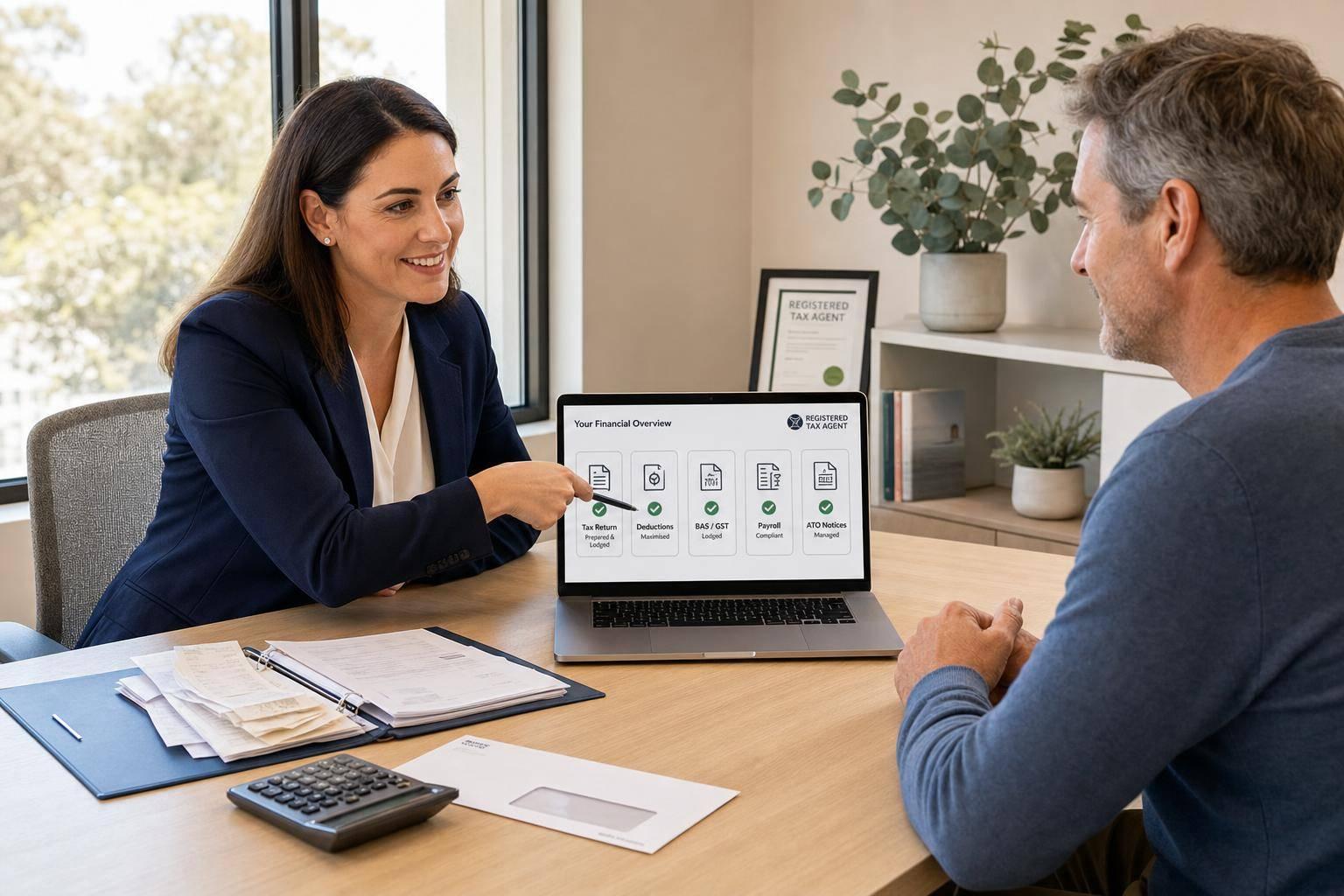
If your tax has more than one moving part, a registered Tax Agent can save you time, cut errors, and deal with the ATO for you. In Australia, a Tax Agent can prepare and lodge returns, check deductions, handle BAS and GST, help with ABN and PAYG registrations, and step in when ATO letters arrive.
Here’s the short version:
- For individuals: I’d use a Tax Agent when income, rental property, shares, or deduction claims get hard to track.
- For sole traders: They help with BAS, GST, IAS, PAYG, and record checks across the year.
- For small businesses: They help keep payroll, super, cash flow, and tax lodgements in line.
- For ATO issues: They can reply to notices, fix past returns, and help set up payment plans.
- For deadlines: Registered agents often have access to later lodgement dates than people who self-lodge.
A simple way to think about it:
| Area | What a Tax Agent helps with |
|---|---|
| Tax returns | Prepare, check, lodge, amend |
| Deductions | Review claims and records |
| BAS & GST | Check figures and lodge on time |
| Business setup | ABN, TFN, GST, PAYG registrations |
| ATO contact | Notices, reviews, overdue lodgements, payment plans |
Why does this matter? Small mistakes can lead to extra tax, missed claims, or ATO penalties. On the other hand, clean records and correct lodgements can make tax time far less stressful.
If I had to sum it up in one line: a Tax Agent helps you stay on top of tax before it turns into a problem.
How a Tax Agent helps with tax returns and deductions
Preparing and lodging individual and business tax returns
A Tax Agent can prepare and lodge returns for salary and wage earners, sole traders, partnerships, companies, trusts, and rental property owners.
Where they tend to help most is when things get a bit messy. If you’ve got income coming from a few places, or there’s a mistake from a past year, a Tax Agent can sort it out properly. They can allocate each income source the right way and, if a return was missed or lodged with errors, they can file an amendment with the ATO.
That kind of accuracy also makes BAS, GST, and bookkeeping much easier to stay on top of during the year.
Identifying deductible expenses and common claim issues
A Tax Agent checks expenses like working from home, motor vehicle costs, tools and equipment, subscriptions, and other business spending against current ATO rules. That helps you claim what’s allowed without drifting into overclaiming.
And that matters more than people think. Overclaiming can cause trouble, but underclaiming can also cost you money by leaving proper deductions on the table. A review before 30 June can help pick up deductions before the financial year wraps up.
For sole traders and small businesses, that same careful approach matters well beyond tax time.
sbb-itb-98a37a2
How a Tax Agent supports sole traders and small businesses year-round
For sole traders and small business owners, the value of a Tax Agent often shows up well before 30 June. If you run a café, manage a franchise, or work in a trade business, tax duties don’t just appear once a year. They keep coming. And when something slips, the cost can sting. That’s why year-round support matters so much, starting with BAS, GST and payroll.
BAS, IAS and GST reporting
A Tax Agent checks your BAS and IAS figures, confirms the right GST treatment, and lodges everything on time. They review each statement before it goes in, make sure GST is being recorded the right way, and help keep deadlines from sneaking up on you.
This kind of steady oversight cuts compliance risk across the year instead of letting issues sit there until tax time.
Payroll, cashflow and bookkeeping coordination
Lodgements are only part of the job. A Tax Agent also helps keep the records behind those lodgements clean and up to date. That can include Single Touch Payroll (STP) Phase 2 reporting, superannuation processing, bank reconciliations, and cash flow planning so money is set aside for upcoming tax bills and other duties.
In plain terms, they help make sure the numbers in your systems line up with what gets reported.
Business setup and tax registrations
A Tax Agent can help with key registrations such as your ABN, TFN, GST and PAYG withholding. They can also guide you on which business structure best fits your tax position.
Getting this right early can save a lot of back-and-forth later. It helps cut down on corrections, missed registrations, and tax duties that might otherwise fall through the cracks.
How a Tax Agent helps with ATO issues, deadlines and compliance
Once BAS, GST and bookkeeping are under control, the next thing to deal with is what happens when the ATO starts asking questions. When tax and reporting work turns into ATO correspondence, a Tax Agent can step in and take that load off your plate.
Managing ATO correspondence and resolving problems
When the ATO gets in touch - whether it’s about a review, a lodgement query or unpaid tax - a Tax Agent can act as your main contact and handle the back-and-forth for you. That matters when a letter lands, a query comes through, or the ATO starts a review.
A Tax Agent can reply to ATO reviews, deal with correspondence directly, and amend past lodgements if needed. If your lodgements are overdue, they can help bring them up to date. If tax is unpaid, they can also work with the ATO to set up a payment plan.
On top of that, they help lower the chance of missed lodgements and penalties before things get out of hand.
Avoiding errors, penalties and missed due dates
A registered Tax Agent keeps an eye on your lodgement schedule and uses tools like Xero to help keep your records clean and current. Registered agents also get access to extended lodgement deadlines through the ATO's registered agent lodgment program, which can ease some of the pressure during busy periods.
That’s why many individuals and small businesses book a tax consultation before any problems start.
When to engage a Tax Agent and what to expect
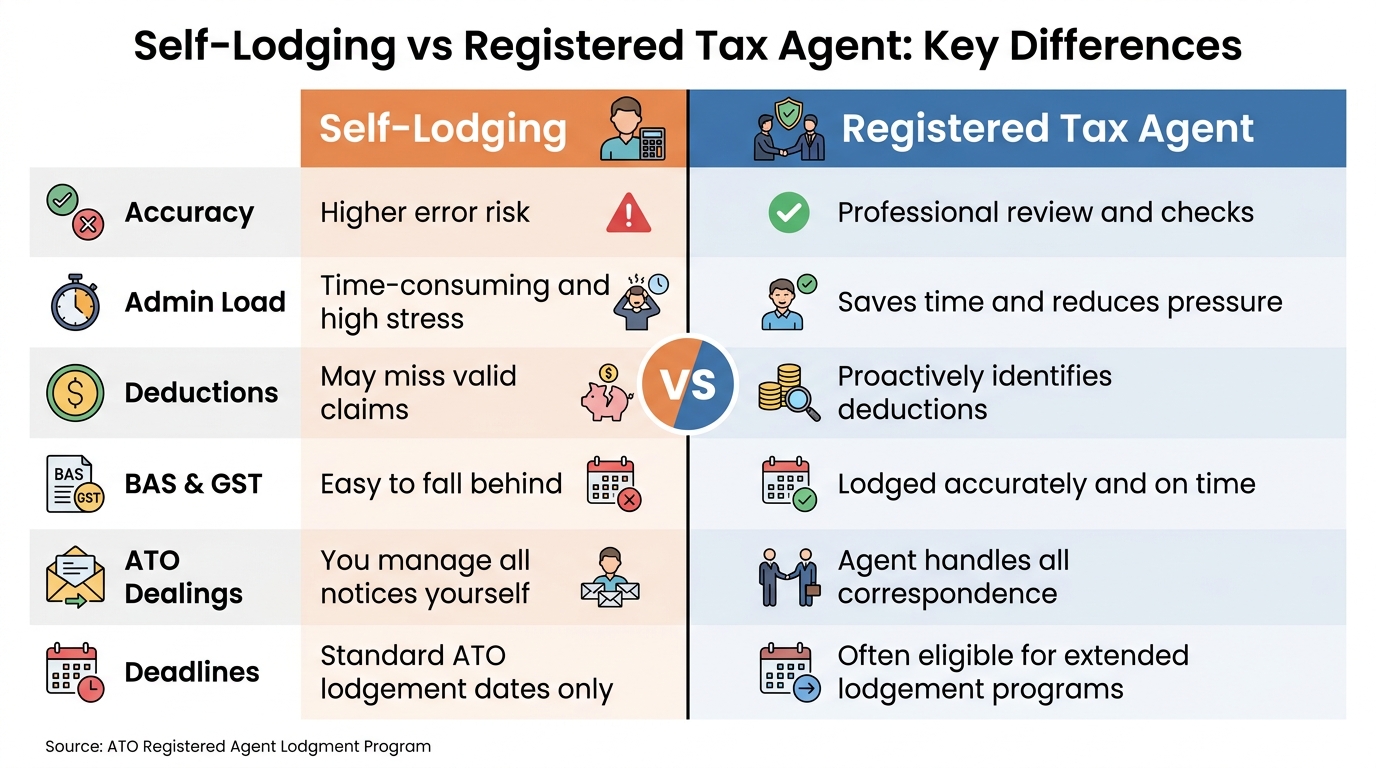
Self-Lodging vs Registered Tax Agent: Key Differences
Signs it is time to get professional tax help
Once tax starts spilling into BAS, payroll, or direct ATO contact, it’s time to get help. When your obligations move past basic record-keeping, bringing in a registered Tax Agent early just makes sense.
A few warning signs tend to show up fast. You might be falling behind on BAS lodgements, getting ATO notices, or second-guessing what you can claim as a deduction. Growth can also turn manual bookkeeping into a headache.
If your tax admin is starting to slip, bring in a Tax Agent before mistakes pile up and due dates start closing in.
Self-lodging compared with using a registered Tax Agent
The main difference between self-lodging and using a registered Tax Agent comes down to time, risk, and how much admin lands on your plate.
| Feature | Self-Lodging | Registered Tax Agent |
|---|---|---|
| Accuracy | Higher error risk | Review and checks |
| Admin load | Time-consuming; high stress | Saves time; reduced pressure |
| Deductions | May miss claims | Proactively identifies deductions |
| BAS & GST | Easy to fall behind | Lodged on time |
| ATO Dealings | You manage notices | Agent handles correspondence |
| Deadlines | Standard ATO dates | Often eligible for extended lodgement programs |
Key takeaways for individuals and small businesses
This kind of support matters most when tax stops being a once-a-year job. A registered Tax Agent helps keep your compliance on track across the year, with less stress, fewer errors, and no nasty surprises.
FAQs
Do I need a registered Tax Agent?
A registered Tax Agent can make tax time a lot less painful, especially if you want to meet your tax obligations properly and on time.
They can prepare and lodge tax returns, manage BAS and GST, advise on deductible expenses, and handle ATO correspondence. That means fewer errors, less chance of missed deadlines, and a better shot at a stronger tax result.
Can a Tax Agent fix past tax mistakes?
Yes. A registered Tax Agent can help fix past tax mistakes by amending earlier tax returns and handling communication with the Australian Taxation Office.
They can also help correct errors and deal with missed tax obligations.
What should I bring to my first meeting?
Bring the documents your tax agent needs to check your financial position and tax obligations. In most cases, that means:
- recent business income and expense records
- payroll and superannuation details
- any relevant ATO correspondence
If you can, give your agent access to your accounting software too, such as Xero, MYOB or QuickBooks. That makes it easier for them to review your bookkeeping ahead of upcoming tax returns or BAS lodgements.