Why Does Bookkeeping help your business?

Why Does Bookkeeping help your business?
Bookkeeping helps your business by showing you where your money is, what you owe, what customers owe you, and what you need to pay the ATO. If your records are up to date, you can track profit, watch cash flow, prepare BAS, run payroll, and make decisions with less guesswork.
For Australian small businesses, this matters more now because the ATO is chasing about $34 billion in small business debt, and Director Penalty Notices rose 50% in 2024 compared with 2023. When the books fall behind, problems build fast: missed bills, unpaid invoices, BAS stress, payroll errors, and cash shortages.
Here’s the short version:
- You see profit month by month
- You know your real bank balance through reconciliations
- You can follow up overdue invoices and plan bills
- You make BAS, tax, super, and STP work easier
- You spot cash trouble early, before it turns into a bigger problem
- You’re better prepared if a lender, investor, or the ATO asks for records
Bookkeeping is not just admin. It helps you stay in control of the business day to day.
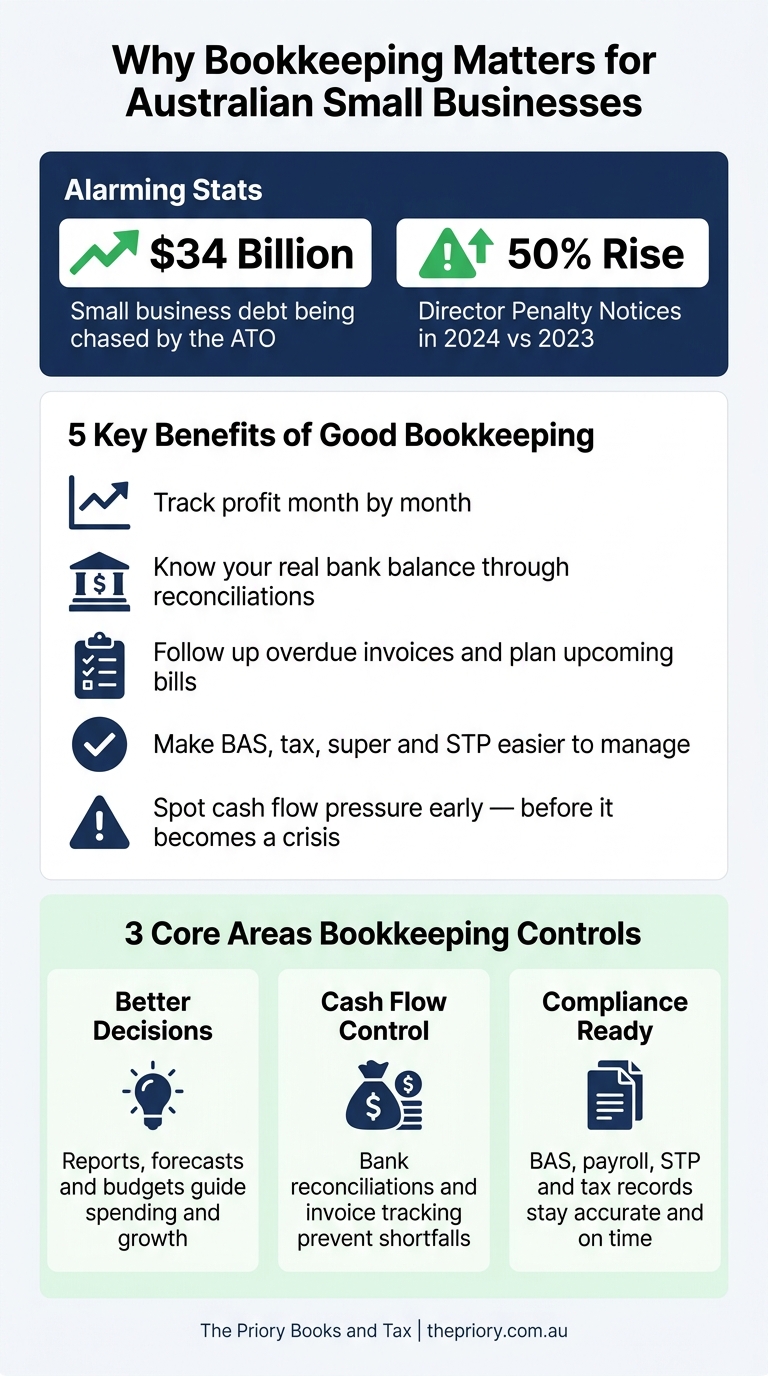
Why Bookkeeping Matters for Australian Small Businesses
How Bookkeeping Improves Profitability for Small Business Owners: S7E3
sbb-itb-98a37a2
How clear records help you make better business decisions
Once your records are up to date, the numbers start doing some of the heavy lifting. Good bookkeeping turns day-to-day transactions into information you can act on. When every sale, expense and payment is recorded the right way, you stop guessing and start making calls based on what’s happening in the business.
Track income, expenses and profit month by month
Current books let you compare this month’s revenue with last month’s, check whether wage costs are starting to climb, and see where margins are getting tighter. That month-by-month view shows what’s going on before year-end rolls around.
Use reports to plan spending and growth
From there, reports help you work out what the business can afford. A profit and loss report, cash flow forecast and budget versus actual report can show where money is going, what’s still within budget, and where spending has drifted past it. Together, they give you a solid base for calls like hiring a new staff member, buying equipment or changing your pricing before you lock anything in.
You can also test different scenarios against your current figures to check the likely effect of a new hire or major purchase ahead of time.
Keep records ready for lenders, investors and the ATO
The same records matter when finance or compliance checks come up. Accurate records make finance applications much easier. Keep them organised and easy to produce during the five-year record-keeping period, and you’ll be in a far better position to respond fast to a lender, investor or the ATO.
How bookkeeping improves cash flow and daily control
The same records that track your income and spending also tell you something just as important: whether you’ve got enough cash for what’s coming next. Cash flow comes down to timing. Money might be on the way, but if wages, super, or BAS are due before it lands, that can still put pressure on the business.
Regular bookkeeping helps you see that timing clearly. You can check what’s in the bank, what’s due soon, and whether the business is likely to come up short. That makes day-to-day decisions a lot easier, and it lowers the chance of getting caught out when key payments fall due.
Bank reconciliations show your real cash position
If you want an accurate view of cash flow, start with bank reconciliations. A bank reconciliation matches your accounting records with your bank statement, so the cash balance in your books reflects what’s actually there.
That matters more than many owners think. If your records are off, even by a small amount, you can end up making decisions based on the wrong bank balance. Receipt capture and bank feeds can make this job faster and cut down manual mistakes.
Manage invoices, bills and upcoming payments
Once your bank balance is up to date, the next job is keeping track of what money is coming in and what needs to go out. Up-to-date books show overdue customer invoices, unpaid supplier bills, and upcoming payments.
With that view, you can:
- follow up overdue invoices
- schedule supplier payments
- set aside cash for tax returns, BAS, payroll, and super
This is where bookkeeping helps with daily control. Instead of reacting at the last minute, you can see what’s ahead and plan around it.
Use cash flow records to spot cash shortfalls early
Regular cash flow reporting helps you spot a shortfall before it hits. Say a customer payment is late and other bills are due soon. The gap shows up in your records early, while there’s still time to do something about it.
That might mean chasing the debtor, cutting non-essential spending, or changing plans for the next few weeks. The key point is simple: regular reporting gives you time to act before cash gets tight.
How accurate bookkeeping supports BAS, tax and payroll compliance
The same records that help you stay on top of cash flow also make BAS, tax and payroll much easier to handle. When your books are up to date, compliance stops feeling like a last-minute scramble and starts looking a lot more routine.
Prepare BAS and tax with fewer errors
Every sale and purchase needs to be coded to the right account. That sounds simple, but it matters a lot. If categories are off, your GST, deductions and BAS figures can drift away from what’s in the business records.
That’s when the pain starts: amendments, missing paperwork, and the classic rush to find receipts right before a deadline. Regular reconciliations help keep GST, BAS and tax records accurate and in step with your accounts.
Keep payroll, super and STP records in order
Payroll runs on the same habits: accurate coding, on-time processing and tidy records. Each pay run needs to record wages, PAYG withholding and leave balances correctly.
Super also needs attention, with payments due quarterly. And under Single Touch Payroll (STP) Phase 2, payroll details are sent to the ATO on each payday, followed by an annual finalisation lodgement at the end of the financial year. Clean payroll records lower compliance risk and help keep each obligation on track.
How The Priory Books and Tax helps keep records current

The Priory Books and Tax supports Australian small businesses with ongoing bookkeeping, BAS and tax agent services, and payroll support. That also includes catch-up bookkeeping for businesses that have fallen behind, with online service available across Australia.
Conclusion: Good bookkeeping saves time, reduces stress and gives you confidence
Once the basics are set up, the upside is pretty simple: clearer numbers and less admin stress.
Good bookkeeping gives you current figures, better control over cash flow, and fewer compliance shocks. It turns everyday record-keeping into decisions you can back with confidence. When your records are up to date, you’re making calls based on facts instead of gut feel.
Key points to take away
Accurate bookkeeping helps you:
- track profit
- manage bills
- get BAS and tax ready on time
- keep payroll records in order
- spot cash flow pressure early
That’s why bookkeeping is more than a compliance job. It’s a practical business tool.
FAQs
How often should I update my books?
Aim to update your books at least once a week so your records stay clear, current and useful.
That weekly routine matters more than most people think. When you reconcile bank accounts, manage purchases and stay on top of bills each week, payroll and BAS prep become far less messy. You’re also more likely to spot problems early and make decisions based on accurate, up-to-date numbers.
What records do I need to keep for BAS and tax?
Keep accurate, up-to-date financial records, including:
- reconciled bank accounts
- income and expense records
- receipts for business transactions
- accounts payable and receivable records
- payroll records for STP and superannuation compliance
Good recordkeeping makes BAS and IAS prep much easier. It also helps keep your business compliant and ready if the ATO comes knocking for a review or audit.
When should I get help with catch-up bookkeeping?
Get professional catch-up bookkeeping help if your financial reporting has fallen behind, or if your DIY records have mistakes that make business decisions harder than they should be.
It’s also a good time to bring in help when reconciling accounts, following up unpaid invoices, or handling payroll starts pulling you away from the day-to-day work of running your business. And if you need accurate, compliant records for your next BAS or tax obligation, having a bookkeeper step in can save a lot of stress.